Sleep Basics · Mattress & Room Setup
Latex Toppers Explained: Pressure Relief, Breathability, and Fit
A topper can soften a bed, steady its feel, and buy a little time before a larger decision. It cannot make every mattress new again. Understanding thickness, firmness, latex construction, and fit helps reveal what this deceptively simple layer can—and cannot—do.
Published October 24, 2026
A mattress is often treated as a single, settled object: a rectangle that is either comfortable or not. In practice, the sleep surface is a small landscape of layers. Sheets, a mattress protector, the cover, comfort materials, support core, and foundation each contribute to the final impression. A latex topper occupies an interesting place in this geography. It is substantial enough to alter the feel of a bed, but it does not replace the mattress underneath it.
That distinction matters. A topper can add cushioning to a surface that feels too firm, or lend a little more responsive support to a bed whose comfort layer has become less agreeable. It may help reduce pressure at the shoulders or hips, depending on the sleeper and the materials below. But it cannot restore a sagging mattress, correct a weak foundation, or turn a badly matched bed into an ideal one by sheer force of optimism.
For Westchester households, where bedrooms may range from compact apartments to generous older homes, the practical questions are often familiar: Will the topper fit the mattress and its frame? Will it make the bed too tall? Will it feel warm under a thick quilt in July, or comfortable during a drafty winter? And, before anything is ordered, is the underlying mattress still providing even support?
Latex has a particular character in this conversation. It yields under pressure, then responds readily as the body moves. It tends not to have the slow, enveloping sensation associated with some foams. For sleepers who want cushioning without feeling deeply “stuck” in the bed, that buoyant quality can be appealing. The details, though—thickness, firmness, latex type, cover, and the condition of the mattress—make a considerable difference.
What a latex topper actually does
A topper is a separate comfort layer placed on top of a mattress. Latex toppers are made from latex foam, which is produced by processing natural rubber, synthetic materials, or a blend. “Latex” names a material family rather than a guarantee of a particular feel, origin, or certification. Product specifications should say what kind of latex is used and how the layer is constructed.
When a sleeper lies down, the topper compresses beneath heavier parts of the body. Its purpose is not simply to become soft; it is to distribute pressure while allowing the mattress below to continue its supporting role. A well-chosen layer can soften the first impression of a firm surface and create a more gradual transition between the body and the mattress. The result depends on the person, the bed, and how those layers interact.
Latex is generally more resilient than slow-response foam. Press it, and it tends to recover promptly. That quick response can make repositioning feel easier, a quality some combination sleepers value. It may also feel less enveloping than materials that conform more slowly. Neither sensation is inherently better. Some sleepers prefer a close, cushioned embrace; others would rather feel gently lifted than deeply cradled.
Pressure relief is similarly personal. A side sleeper may welcome extra cushioning at the shoulder and hip, while a back sleeper may want enough give to feel comfortable without allowing the pelvis to sink excessively. Stomach sleepers often prefer a relatively firm, level surface. These are useful starting points, not rules that can predict every body or sleep position. The best test is whether the complete sleep surface feels comfortable and supportive over time.
Thickness: the size of the change
Topper thickness is one of the clearest ways to estimate how much the feel of a mattress may change. A thinner layer usually makes a subtler adjustment. A thicker one can alter the surface more noticeably, adding more material between the sleeper and the mattress. This is not a simple equation in which every additional inch delivers a fixed amount of softness: latex firmness, density, body weight, and the mattress beneath all influence how deeply the layer compresses.
A thin topper may suit someone who likes the bed overall but wants to soften a slightly firm first impression. A thicker option can create a more pronounced cushioning effect, particularly when the existing mattress is firm and in good condition. But extra thickness is not automatically better. A layer that compresses substantially may change alignment or make movement feel less stable for some people. And on a mattress that already feels too soft, a thick soft topper may deepen the very sensation the sleeper is trying to escape.
Before comparing measurements, consider the whole bed. A topper adds height, and that affects more than the appearance of the mattress. It can make it harder to get in and out of bed, bring the sleeping surface closer to a headboard, and require deeper fitted sheets. Mattress protectors and fitted sheets need to accommodate the combined depth of mattress and topper. Measure the existing bed, including any pillow-top or sewn-in comfort layer, rather than relying on the label alone.
The bed frame deserves a look, too. A topper cannot compensate for a foundation that bows, shifts, or leaves unsupported gaps. Check the mattress maker’s foundation requirements, particularly if the bed is on a slatted frame. If the mattress appears uneven or has a visible hollow, adding more material may disguise the problem briefly without correcting it.
Firmness and sleeping position
Firmness is a description of feel, not a universal measurement. One person’s medium may be another person’s soft, and a topper can feel quite different on a firm innerspring mattress than on a yielding foam bed. It is more helpful to ask what the current surface does: Does it create uncomfortable pressure? Does the body feel unsupported? Is there a clear dip? Does the bed feel comfortable when first lying down but less so after a full night?
For side sleepers, a modestly softer layer may allow the shoulder and hip to settle into the surface, reducing a sense of concentrated pressure. The aim is not to sink without limit. The torso should remain comfortably supported, and the neck pillow should still work with the height of the shoulder and the new mattress surface. Changing the bed’s height at the shoulder can change how a pillow feels, so it is sensible to reassess both together.
Back sleepers often look for a balance: enough cushioning around the body’s contours, with an overall sense of steadiness. A softer topper may be pleasant on a firm bed, but too much give can feel unstable to someone who prefers a flatter surface. Stomach sleepers commonly find that a firmer feel is more comfortable, since excessive sinking around the midsection may feel awkward. These patterns are broad tendencies, not medical prescriptions.
Combination sleepers—the people who change position through the night—may appreciate latex’s quick recovery. A responsive surface can make turning feel less laborious than one that holds a deep impression for a moment. Still, “responsive” does not mean weightless or universally comfortable. If possible, testing a similar latex feel in person can help translate product language into something more tangible.
Dunlop, Talalay, and the question of feel
Two names commonly appear in descriptions of latex: Dunlop and Talalay. They refer to different manufacturing processes. In general terms, Dunlop latex is made through a process in which the material is poured into a mold and vulcanized. Talalay latex involves additional steps, including vacuum expansion and freezing before vulcanization. These production differences can contribute to differences in feel and consistency, but they do not establish a simple ranking of quality.
Shoppers sometimes encounter shorthand suggesting that one type is always firmer, more durable, or more appropriate for a particular position. Such statements can be too neat. The finished feel depends on the formulation, firmness, thickness, and design of the particular product. A specification sheet is more useful when it identifies the actual layer’s firmness and materials than when it relies on a process name alone.
Latex may be natural, synthetic, or blended. Natural latex is made from rubber-tree sap; synthetic latex is made from petrochemical ingredients; blends combine materials. Certifications, where provided, can help clarify what has been assessed, but readers should check the scope of a certification rather than treating a badge as a complete description. People with a known latex allergy should consult a qualified health professional and contact the manufacturer about materials and exposure before choosing a latex bedding product.
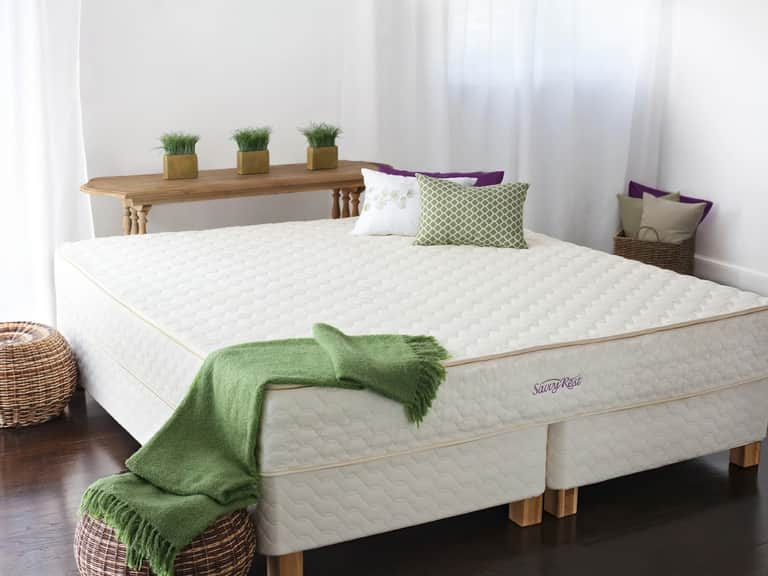
For a sense of how layered latex construction can be used in a whole mattress, the Savvy Rest Serenity Latex Mattress is a customizable, 10-inch mattress with three latex layers and a cotton-and-wool casing. It is not a topper, and it should not be treated as a substitute for one; it is simply an example of how latex firmness and layering can be configured within a complete sleep surface.
Breathability is a system, not a promise
Latex is often described as breathable. Its open, resilient structure can allow air to move differently from some denser materials, and perforations or pinholes in a layer may further affect ventilation. Yet no material label can promise that every sleeper will feel cool. Temperature at night is shaped by the mattress beneath, the topper cover, sheets, blankets, bedroom conditions, and the sleeper’s own comfort needs.
A topper encased in a thick or tightly woven cover may feel different from one with a lighter, more open textile. A waterproof protector can also change the surface: some protectors are designed to limit liquid passage while retaining a soft hand, but any added layer may affect airflow and tactile feel. If heat is a concern, look at the entire bedding stack rather than asking the topper alone to solve it.
Westchester’s seasons make this practical rather than theoretical. A bedroom that feels comfortable in a cool autumn may behave differently during a humid summer stretch, particularly in a room with limited air circulation. Lightweight, breathable sheets and a season-appropriate blanket may do as much for comfort as changing the mattress layer. Room temperature and airflow matter, too. A topper is one part of the environment, not a thermostat disguised as bedding.
Wool or cotton in a mattress cover can influence moisture management and surface feel, though the outcome depends on construction and the rest of the bed. The word “natural” is not itself a performance measurement. Look for clear information about the cover fabric, fill, care instructions, and any waterproofing or treatments, then consider how those details fit your own preferences.
Fit: dimensions, sheets, and the foundation below
A topper should match the mattress dimensions. A layer that is too small may leave exposed strips at the edges; one that is too large can bunch or hang over the sides. Check the listed length and width rather than assuming that every “queen” or “king” product has identical measurements. Mattress sizes can vary by region and manufacturer, while some beds use less common dimensions.
Also check how the topper is intended to stay in place. Some designs rely on the weight of the bedding and sleeper; others use straps or a fitted skirt. A smooth mattress cover, a slippery protector, or a restless sleeper may cause movement. If the topper shifts, the result can be a rumpled surface that is uncomfortable and inconvenient, even when the material itself is well chosen.
Measure the bed’s total depth after adding the topper. Deep-pocket fitted sheets are often necessary, and the existing sheet may no longer fit securely. A loose sheet can pull free during the night, changing the feel of the surface and creating a regular nuisance. Check the depth listed for the sheet and compare it with the combined mattress-and-topper measurement, allowing for the protector as well.
Finally, assess the mattress honestly. If it is sagging, uneven, damaged, or past the point of providing comfortable support, a topper is unlikely to resolve the underlying problem. The topper conforms to what is beneath it; it does not rebuild a deteriorated support core. If the bed is still supportive but simply feels firmer than desired, a topper may be a reasonable adjustment. If the bed has a pronounced dip, start by investigating the mattress, foundation, and any applicable warranty.
Care, weight, and the life of a topper
Latex toppers are not all cared for in the same way. Some have removable covers; others are intended to be used with a separate protector. Follow the maker’s directions for cleaning and ventilation, and do not assume that a foam core can be put in a washing machine. Moisture can be difficult to remove from thick material, and harsh cleaning methods may damage the layer or its cover.
A washable protector can help limit ordinary spills, sweat, and dust from reaching the topper, but it should fit properly and suit the desired feel. If the cover is removable, check whether it is machine washable and whether it must be dried in a particular way. Product care instructions are not decorative fine print; they are part of the product’s practical fit with a household.
Latex can be heavy, especially in larger sizes and thicker constructions. That may be a benefit in keeping the topper steady, but it can make turning, rotating, or lifting the layer more difficult. Consider who will handle the bedding and how often it needs to be moved. A product that is comfortable in theory should also be manageable in the room where it will live.
Odor may be noticeable when a new foam product is unpacked. Ventilation and time can help, but follow the manufacturer’s instructions and contact the seller if an odor is persistent or concerning. If anyone in the household has particular sensitivities, review the product materials before purchase rather than relying on a general claim about natural composition.
A measured way to choose
Before buying, write down what you hope to change. “The bed is uncomfortable” is true but broad; “the shoulder feels pressed when I sleep on my side” or “the surface feels firm but otherwise supportive” points toward a more useful conversation. Note the mattress age and condition, your usual sleep position, whether you sleep warm, and how much additional height the bed can accommodate.
- Inspect the mattress and foundation. Look for sagging, uneven support, loose slats, or a foundation that does not meet the mattress requirements.
- Decide how much change you want. A modest adjustment and a substantial softening call for different thickness and firmness considerations.
- Read the material description. Check latex type, firmness, thickness, cover construction, and any stated certifications.
- Measure the whole bed. Include the mattress, existing comfort layers, topper, protector, and fitted-sheet depth.
- Review the trial and return terms. A topper’s feel can depend on the mattress beneath it, so clear return conditions are especially useful.
- Consider the whole sleep environment. Sheets, blankets, room temperature, and pillow height can change how the finished bed feels.
There is value in testing a latex surface when a showroom is accessible, but a brief test is only a clue. Spend enough time in your usual position to notice pressure and support, and remember that showroom beds may have different foundations or covers. Ask specific questions rather than seeking a universal verdict: What is the latex type? What is the firmness? How is the topper secured? What care is required? What happens if the fit is wrong?
The useful limits of a topper
Sleep is influenced by more than the surface beneath the body, and no topper can guarantee a particular health outcome. Persistent pain, numbness, or other concerning symptoms deserve attention from an appropriate healthcare professional. Bedding adjustments can improve comfort for some people, but they are not a diagnosis or treatment plan.
As a comfort tool, however, a latex topper occupies a sensible middle ground. It may be less disruptive than replacing a mattress and more substantial than changing sheets or a pad. Its responsive feel, potential cushioning, and range of thicknesses make it worth considering when the existing bed is structurally sound but not quite right. The crucial phrase is “structurally sound.” A topper can refine a surface; it cannot rescue one that has stopped supporting the sleeper evenly.
Choosing well is less like selecting a magic layer than making a careful edit. Identify what feels wrong, determine whether the mattress beneath is still doing its job, and then compare thickness, firmness, construction, fit, and care. In the quiet arithmetic of a bedroom, the right adjustment may be small. The effect, if the bed is otherwise in good condition, can be pleasantly noticeable.