Bedding · Sleep Environment
The Case for Wool Toppers: Temperature, Texture, and Seasonal Comfort
A wool topper does not turn a bed into a different bed so much as add another layer of negotiation: between softness and support, warmth and airflow, the sleeper and the season. Its appeal is less about a dramatic transformation than about the quieter properties of a natural fiber—and the particulars of how that fiber is prepared, contained, and cared for.
There is a certain ambition in the modern mattress: to be at once cloudlike and corrective, cool and cozy, yielding at the shoulder yet steadfast beneath the hip. A topper enters this crowded conversation with a more modest proposition. It sits between the sleeper and the mattress, altering the surface feel without requiring the bed beneath it to be replaced. Wool, in particular, offers a distinct combination of cushion, insulation, and moisture management.
That combination can sound almost too convenient, especially when bedding is described in the language of effortless comfort. Wool is not a temperature-control switch, and a topper cannot resolve every cause of poor sleep. Its effects depend on the thickness and construction of the layer, the materials around it, the room’s conditions, and the person lying on it. Still, for sleepers who find a mattress a little too firm, a bed surface a little too clammy, or seasonal changes more noticeable than they would like, wool is worth understanding on its own terms.
The best way to consider a wool topper is not as a cure-all, but as a material choice. What is inside? How much of it is there? How is it held in place? What kind of care will it ask of its owner? The answers are less glamorous than a promise of perfect sleep. They are also more useful.
What a topper can—and cannot—change
A mattress topper adds a layer to the sleeping surface. Depending on its material and thickness, it may soften the initial feel of the bed, provide a little extra cushioning, or change the way warmth and moisture are experienced at the surface. It does not ordinarily replace the mattress’s underlying support system. If a mattress is sagging, damaged, or no longer comfortable in a fundamental way, a topper may disguise the problem for a while without correcting it.
This distinction matters because “softness” and “support” are often treated as opposites when they are better understood as different parts of the experience. A bed can feel more cushioned at the surface while still resting on a firm mattress. Conversely, a thick, plush layer can alter alignment or make it harder to move, depending on its design and the sleeper’s body and preferred position. People respond differently to the same surface; the only reliable guide is to consider the mattress already in the room and what, specifically, feels wrong about it.
Wool toppers are usually made with wool batting or other wool fill held inside a fabric shell. Some are relatively thin and intended to add a subtle layer; others are substantially loftier and more pillowlike. The word wool alone does not tell a shopper how a topper will feel. Fill quantity, quilting, construction, fabric, and the way the topper is secured all contribute to its character.
The particular nature of wool
Wool has long been used in bedding and clothing because it can provide insulation while also interacting with moisture. Its fibers create a layer of still air that contributes to warmth, while wool’s ability to take up moisture vapor can help a sleep surface feel less damp than one that holds moisture close against the body. These properties do not mean wool actively cools a hot room or prevents night sweats. They describe a material that can help moderate the feel of the layer around the sleeper.
That difference between regulation and cooling is worth keeping in mind. A wool topper is not a fan, a chilled gel surface, or a substitute for a comfortable room temperature. Nor does it make every bed suitable for every climate. Instead, wool’s insulating character may be welcome when nights are cool, while its relationship with moisture may make the surface feel more balanced for some sleepers across changing conditions. The outcome depends on the whole sleep environment: mattress, sheets, blankets, room temperature, and the person’s own comfort.
Wool also has a texture that is not always obvious from a product description. In a well-made topper, the fiber is enclosed within a cover, so the sleeper is not necessarily in direct contact with raw wool. The sensation may be soft, springy, gently cushioned, or comparatively substantial, depending on the construction. It is not the slow, enveloping contour of some foams, nor the buoyant give of latex. Wool tends to offer a more responsive, layered feel, though individual products vary.
For anyone sensitive to the feel of bedding, the cover deserves as much attention as the fill. Cotton, for instance, may provide a familiar breathable enclosure, while a tightly woven fabric can influence how the topper moves and how air passes through it. Product details should identify the cover material, fill, and any finishing or care requirements. Broad labels such as “natural” or “luxury” are not substitutes for a clear description.
Seasonal comfort is a matter of the whole bed
In Westchester, where the calendar brings genuinely different sleeping conditions—from humid summer nights to the dry, heated air of winter—a bed can feel like a different piece of furniture in January than it did in July. Wool’s seasonal appeal lies partly in its ability to contribute insulation without necessarily producing the sealed-in sensation some sleepers associate with heavier synthetic layers. But there is no universal seasonal verdict. One person’s welcome warmth is another’s too much.
It helps to think in layers. A wool topper may be paired with a lightweight cotton sheet in warm weather, then with a warmer blanket or duvet as temperatures fall. If a sleeper already uses thick bedding, an insulating topper may add more warmth than desired. If the bedroom is consistently hot, improving ventilation or adjusting the bedding ensemble may matter more than changing the topper. The room’s thermostat, window exposure, heating system, and the number of blankets on the bed all have a part to play.
Seasonal changes can also reveal whether the issue is warmth, softness, or moisture. A bed that feels uncomfortable in summer may be too warm, but it may also be affected by a mattress protector, synthetic sheets, or a bedroom that retains heat. A bed that feels harsh in winter may need more surface cushioning—or simply different blankets. Before buying a topper, it is useful to identify the discomfort as precisely as possible. “I wake up hot” points toward a different investigation than “my shoulder feels pressed into the mattress.”
- If the bed feels too firm: consider whether a topper’s thickness and loft are likely to provide the amount of cushioning you want, and whether that extra softness may affect your preferred sleeping position.
- If the surface feels warm or damp: look at the full bedding stack, including the mattress protector and sheets, as well as the room’s ventilation and temperature.
- If comfort changes with the season: try adjusting blankets and sheets first, then assess whether the mattress surface itself needs a year-round change.
- If the mattress is worn or sagging: treat a topper as a surface layer, not a repair for the support beneath it.
Construction: where the differences hide
Two wool toppers can share a name and still behave quite differently. The first distinction is thickness. A thin pad may protect or subtly soften the mattress, while a thicker, generously filled topper can make a more noticeable change to the surface. The product’s stated height is helpful, but it is not the whole story: fill density, quilting, and how the material settles under weight affect the sensation as well.
Next comes the fill itself. Wool may be described by its origin, grade, or processing, but those details should be read alongside the actual construction. Is the fill wool batting? Is it secured in compartments or held in place by quilting? Does the design allow the fill to shift? A topper that distributes its material evenly may feel different from one whose fill is arranged in distinct sections. Clear specifications are especially important when the description relies heavily on broad assurances about comfort or quality.
Then there is the shell. A cotton cover is common in natural-fiber bedding and can provide a durable enclosure, but the weave and finish matter. The shell may influence softness, breathability, and the topper’s ability to stay smooth beneath a fitted sheet. A mattress pad or protector placed over the topper can also change the feel, and a fitted sheet must be deep enough to accommodate the mattress and added layers together.
Finally, consider how the topper stays in place. Some designs rely on elastic straps or corner anchors; others are held by the weight of the bedding and fitted sheet. If a topper shifts during the night, even an otherwise comfortable one can become an irritation. Measure the mattress, include any existing pad or protector in the calculation, and check the dimensions and attachment method before purchasing.
Care is part of the comfort calculation
Wool bedding is not necessarily difficult to maintain, but it may require more thought than a simple machine-washable cotton layer. Care instructions vary by construction. A topper might need airing and spot cleaning rather than routine laundering; washing it improperly can affect its shape, loft, or fill distribution. Before choosing one, read the manufacturer’s directions and be realistic about whether they fit your household’s habits.
Regular airing can help bedding feel fresh, though direct sun and damp conditions may not suit every product. A washable protector above the topper can reduce everyday exposure to perspiration and spills, making the topper itself easier to keep in good condition. The protector should not be so impermeable or heat-retaining that it defeats the comfort qualities the wool layer was meant to provide. Again, each layer participates in the result.
Wool can compress with use. Some settling is part of the life of a filled bedding product, and the way it is quilted or constructed can influence how evenly that occurs. It is sensible to ask about expected maintenance, whether the topper should be rotated, and what the warranty does and does not cover. A high price does not remove the need for ordinary care, nor does a natural material guarantee a long life under every pattern of use.
When wool may be the right kind of change
A wool topper may appeal to someone who wants a natural-fiber layer with a cushioned feel and an insulating character, without the more conforming sensation of many foam toppers. It may also suit a sleeper who is curious about moisture management and prefers to build comfort from materials whose composition is clearly described. Those preferences are not medical claims. Wool does not diagnose or treat sleep disorders, allergies, pain, or temperature-related conditions, and claims about health effects deserve careful scrutiny.
It may be less suitable for someone who wants an immediately cool, slick surface, an aggressively contouring feel, or a bedding layer that can be tossed into a washing machine without concern. People with wool sensitivities should review materials and construction closely and, where needed, seek advice from a qualified clinician. Natural fibers can still provoke sensitivities, and a cotton cover does not necessarily answer every question about what is inside.
It is also worth asking whether the desired change is large or small. If the mattress is basically comfortable but a little austere, a modest topper may provide enough softness. If pressure relief is the priority, the amount and distribution of cushioning matter. If the mattress is old and uneven, adding a layer may yield diminishing returns. No material can make the bed beneath it irrelevant.
A product example, read for its materials
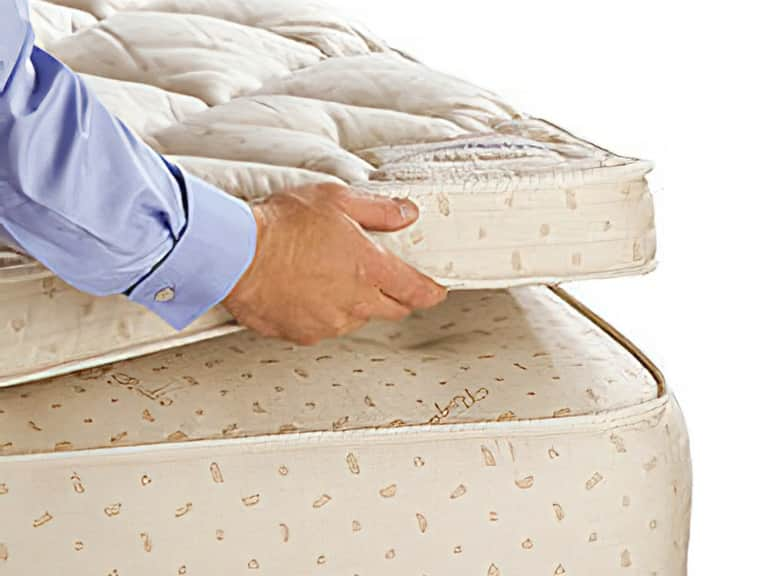
One example of a substantial wool-filled layer is the Royal-Pedic Premier Natural 4-inch Pillowtop Pad. Its description specifies a four-inch construction with chemical-free French wool batting wrapped in long-staple cotton, and presents it as an added cushioning layer that rests on the mattress beneath the pad and fitted sheet. The stated thickness suggests a more pronounced change in surface feel than a slim mattress pad would provide.
That description is useful not as a universal recommendation, but as a reminder to examine the details. A four-inch topper will affect the height and feel of the bed, so sheet depth and the sleeper’s preference for a plush surface should be considered. The product description also refers to moisture-wicking wool; as with any bedding claim, a shopper should distinguish a material’s stated properties from a guarantee that a particular person will sleep cooler. Comfort remains personal, and specifications cannot replace trying to understand one’s own needs.
A quieter way to choose
The most persuasive argument for wool is not that it promises a perfect night. It is that it offers a particular set of qualities—cushion, insulation, and a capacity to interact with moisture—that may be useful in the right bed and the right room. Its advantages are tangible enough to investigate, but never so absolute that they eliminate the need for judgment.
Before comparing wool mattress toppers, write down what you hope will change: less pressure at the shoulder, a softer first impression, a surface that feels less clammy, or a bed that works across more of the year. Then check the fill, thickness, cover, attachment, and care instructions. Consider what your sheets and protector will add, and whether the mattress itself is still providing an even foundation. If possible, learn the retailer’s return terms before making a decision; bedding is an intimate purchase, and descriptions can only take a person so far.
In the end, a wool topper is not a small act of interior decoration, though it may make a bed feel more finished. It is a practical adjustment to the place where the body spends a considerable portion of its life. The right one may make the surface more inviting and help the bed feel more balanced as the weather shifts. The wrong one may be too warm, too lofty, too difficult to care for, or simply unlike the sleeper imagined. The useful question is not whether wool is inherently superior. It is whether this particular construction suits this particular bed, in this particular room, for the person who has to sleep there.